
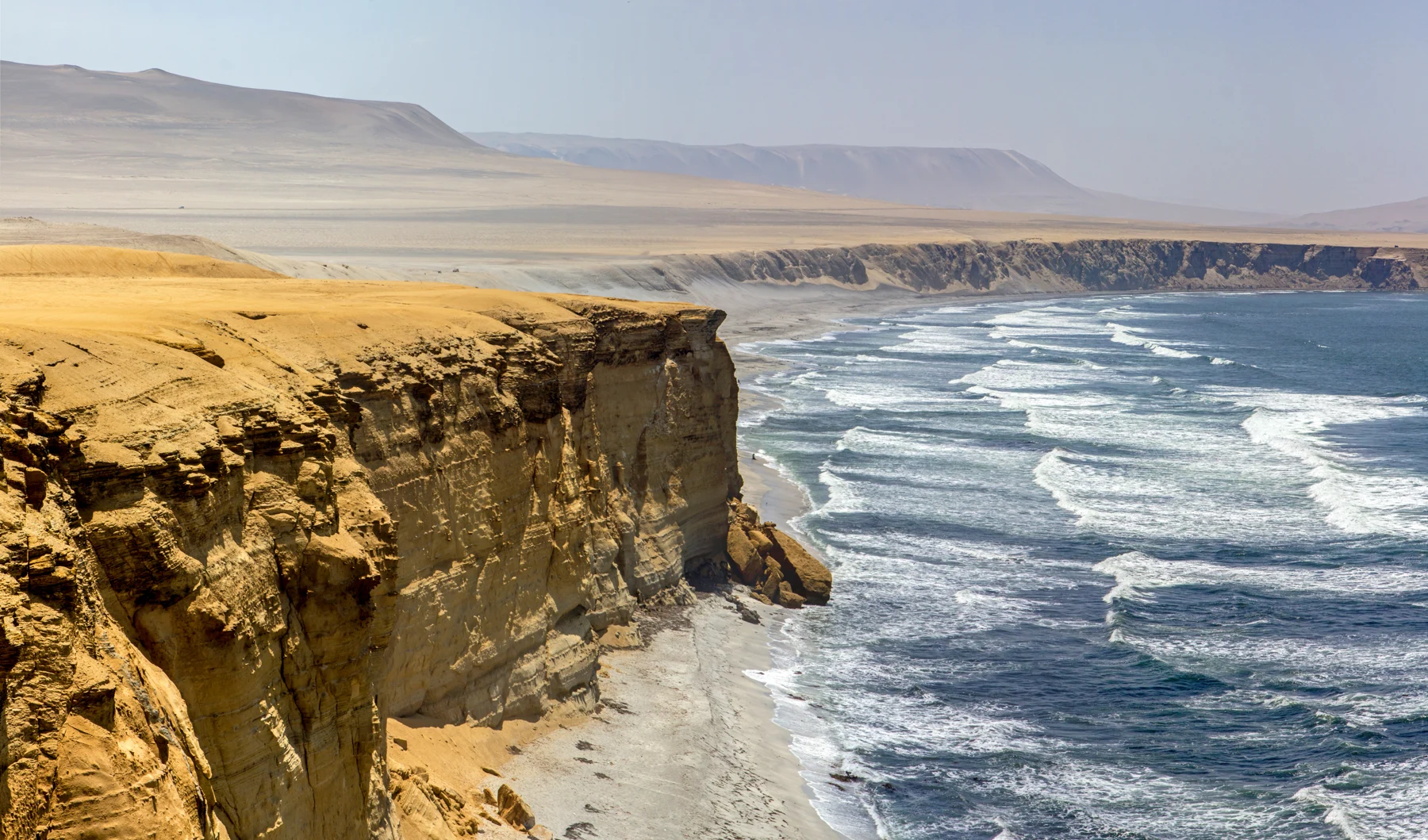
Paracas national reserve: visitor routes and planning
Visit the mainland desert coast by a permitted land circuit, with beach, viewpoint and museum stops chosen separately.

BallestasIslands.com is an independent travel guide. We are not SERNANP, a reserve authority or a tour operator.
Choose the reserve for the desert coast on land. Use the visitor entrance and allowed stops. Arrange a vehicle for the whole route, including the return. Keep the boat separate unless a package states both visits. Check access and charges for your date. A scenic beach stop is not always a swim stop.
On this page12
- What Paracas National Reserve protects
- Land routes and visitor areas
- Reserve versus Ballestas boat visit
- Access, fees and current notices
- Beaches, museum and wildlife
- Self-guided and guided choices
- Arrive and choose a base
- Decide how much time to allow
- Food and practical preparation
- Build a route around one purpose
- Continue with the related guide
- Verdict on Paracas National Reserve
Paracas National Reserve protects the desert coast and sea. Follow its visitor roads to bays and viewpoints. You can also choose a beach stop or the site museum. This is a different visit from the Ballestas boat.
Choose which place you want to see first. Then compare entry with the full tour price.
Choose your mainland visit
Protect time for the coast, a beach or the site museum rather than treating every stop as the same task.
Details for each option
Visit interest: Desert and sea views
- Useful starting choice
- A permitted coastal circuit
- Detail that changes the plan
- Actual stops and time at each
Visit interest: A specific beach
- Useful starting choice
- A named beach plan
- Detail that changes the plan
- Access, swimming instruction and facilities
Visit interest: Archaeology
- Useful starting choice
- The Julio C. Tello site museum
- Detail that changes the plan
- Its own opening and entry terms
Visit interest: Shore birds
- Useful starting choice
- A patient mainland observation route
- Detail that changes the plan
- Habitat, optics and current access
Visit interest: Island colonies
- Useful starting choice
- A separate Ballestas boat
- Detail that changes the plan
- Pier, sea conditions and sailing terms
Sources and limits are explained in the guide · · Table by Ballestas Islands
Compare recorded visitor counts, official admission and boat timings in our 2026 facts and figures, with downloadable data for the two separate visitor sites.
What Paracas National Reserve protects
SERNANP's reserve account describes the protected coast and sea in the Ica region. Checked October 2026. The water is part of the place, even when a visitor spends the day on land.
Look at the relationship between the dry slopes and the sea. A viewpoint can show cliffs and surf, while a sheltered shore may support a different set of birds. The reserve is more than a sequence of beaches with different names.
Wildlife needs the right habitat and time to observe. A short circuit can show you the place. It cannot promise every species on the list. Use the reserve animal guide if that interest leads your plan.
The reserve is not the town itself. El Chaco is the town waterfront. Many visitor services and boat desks are here. A room described as “Paracas” needs an exact address before you can judge the journey to the entrance.
Land routes and visitor areas
The official visitor page lists the northern visitor circuit and named stops. Checked October 2026. Use its route information as a starting point, with the current instruction from staff deciding what is accessible on the day.
The names include coastal viewpoints, Playa Roja and Playa La Mina. They are not interchangeable. A view of red sand is a different task from a longer beach stay. Ask what you do at each stop. A long list of names does not explain the visit.
Use the reserve map reference before choosing transport. It separates orientation from permission. A visible road on an old map does not prove it is open to every vehicle or visitor use.
Reserve versus Ballestas boat visit
The boat leaves the mainland for offshore rocks. The reserve land visit uses roads and visitor stops on the coast. Both can appear under the word “Paracas,” but they answer different interests.
Choose the Ballestas boat comparison for wildlife viewed from a vessel. Choose a reserve land tour for the mainland. A combined outing needs both parts stated clearly.
Ask a seller to break its price into the services and entries included. Do not compare an entry ticket with a vehicle tour as if they buy the same thing. The ticket gives access under its terms; transport and guiding may be separate purchases.
The local excursion comparison helps if you are still choosing between sea and land. For a larger day, the full-day formats explain what changes when more places and road travel are added.
Access, fees and current notices
The official visitor page names the Santo Domingo checkpoint for access. It lists a general visitor window of 09:00 to 16:00 daily. Checked October 2026. Confirm exceptions, last entry and the time needed for your route with staff before relying on that window.
Start with the entrance-fee guide for the distinction between land, island and pier charges. Some official pages retain old promotional information. Ask whether the combined fare applies to you. Check that it is valid on your date.
Carry the identity evidence needed for the ticket category you buy. A reduced local rate is not a general discount for anyone staying nearby. Ask what proof you need for the rate. Check before you select it or pay.
Do not read an old closure notice as permanent, or an old reopening as a live operating promise. Check the current instruction and the exact route affected. A restriction at one beach does not necessarily describe the whole reserve.
Beaches, museum and wildlife
Use the beach comparison to choose by purpose. Viewing, walking and bathing are distinct activities. A beach photo cannot settle the current swimming rule or the sea conditions.
Playa Roja is a landscape-viewing decision. Check permitted viewpoints and do not assume access onto the sand. Playa La Mina needs its own check for entry, facilities and water conditions.
For archaeology, identify the museum before arranging a driver. The museum guide explains the Julio C. Tello site museum and its official visitor information. A generic “history museum” label can send you to the wrong place.
For birdwatching, allow time rather than adding an unrealistic species checklist. The guide or reserve staff can help you choose a permitted observation area. Remain where allowed and use binoculars instead of approaching a feeding flock.
Self-guided and guided choices
A guided vehicle can suit a visitor who wants the route and stops organised together. Ask who runs the service, how many people share it and which stops are included. A private format gives the group more control only within the current rules and conditions.
An independent visit gives you more responsibility for transport and timing. Check that the vehicle and intended route are permitted. Arrange the whole return before entering, especially if you plan a beach stop away from the main town.
Do not assume a scooter is allowed everywhere a car can go. The scooter guide separates access permission from licence, rental and insurance questions. A shop may have a vehicle for hire. That does not prove you may use it in the reserve.
Choose the format that serves your interests. A short circuit can be right for general views. A bird-focused visit may need fewer stops with more observation time. A museum visit has its own timetable and should not be treated as a stop the driver can add after closing.
Arrive and choose a base
For road travel from the capital, use Lima to Paracas. The reserve-from-Lima guide then explains the land visit after arrival. A journey to town is not transport around the reserve.
From inland, check the Ica connection. Save the actual arrival point and onward pickup. A route name in a bus listing is less useful than the terminal printed on the ticket.
The town map helps separate arrival, waterfront and reserve access. Choose a place to stay by the room and the journey to your departure point. The hostel comparison focuses on shared and social stays.
Decide how much time to allow
A reserve circuit, a boat and a transfer to another destination can compete for the same day. Choose which part matters most before booking all of them. The duration guide compares short and overnight plans.
For a single day, keep the order practical. Include check-in, entry and the road journey between stops. A list that fits on paper can still leave no room for lunch or a delayed boat.
If you are deciding whether to stop at all, read whether Paracas suits your trip. A wildlife interest and a beach-holiday interest can lead to different answers. There is no need to include every nearby attraction to make the visit worthwhile.
Use things to do for a set of choices rather than a mandatory checklist. Keep the reserve's conservation purpose beside the appealing scenery. It shapes where visitors can go and what they can do there.
Food and practical preparation
Arrange meals around the actual route. A guide should explain where the group stops and whether the meal is included. The restaurant comparison separates town dining from hotel settings.
Bring the water and sun protection needed for time outside. Add a layer for the wind and keep loose items secure. Do not assume every viewpoint has a shop, toilet or staffed shelter.
If facilities matter to someone in the group, ask about the exact stop before leaving. Steps, surfaces and vehicle boarding can change what is practical. A general promise that a trip suits everyone is less useful than a clear answer to a stated need.
Take rubbish out and leave wildlife and plants alone. Do not cross a barrier to recreate a photograph. The best visit lets you understand the coast without treating access restrictions as obstacles to defeat.
Build a route around one purpose
For a view-led circuit, ask for the peninsula and coast stops on the official northern route. Use Playa Roja as a view stop. Then choose whether another viewpoint adds something you want to see, or merely another drive and photograph. Fewer stops can leave more time outside the vehicle.
For a beach-led circuit, ask about La Mina, Raspón or Yumaque. The official map marks these with bathing symbols. That shows the intended visitor use; it does not clear the water for your day. Ask staff about current access, and accept a shore visit if the sea or advice rules out a swim.
For a museum-led circuit, give the driver the full Julio C. Tello name. Check its own schedule and protect time inside. The interpretation centre is another stop. A route that names only “museum” still needs a clear answer about which building you enter.
For a wildlife-led circuit, choose time to look rather than the most stops. Ask where you may watch from the shore without crossing sensitive ground. A guide should help with the habitat and the birds present, even when a hoped-for species does not appear.
Keep the plan usable for the whole group
Before setting out, agree what happens if someone needs to stop early. Ask about toilets, shade and getting back into the vehicle. Put the needs of the least mobile guest into the route now, while a change is simple to make.
Choose a clear fallback for the main stop. If a beach is closed, you may prefer a view or a meal in town. If the museum cannot admit you, another beach is not automatically an equal choice. Tell the driver what you would value instead.
Save the route and contact details before leaving good reception. Keep one person in the group aware of the agreed finish and next fixed booking. This helps you enjoy the coast without checking the time at every stop.
Continue with the related guide
Verdict on Paracas National Reserve
Choose Paracas National Reserve for the mainland desert coast, with a route and transport plan that fit your interests. Ask about the boat, beach and museum separately. Check current access and the full cost first. Then leave time to enjoy the coast at your chosen stops.