
Paracas history museum: Julio C. Tello visitor guide
Visit the Julio C. Tello site museum inside the reserve, with its own opening and admission distinct from the interpretation centre.

BallestasIslands.com is an independent travel guide. We are not SERNANP, a reserve authority or a tour operator.
Give Julio C. Tello its own visit. Check its schedule and ticket. The museum directory lists Tuesday to Sunday opening. It also gives the ticket categories. Recheck special-date notices, then arrange transport that leaves time inside. A generic “museum included” promise should name this venue and say whether admission is covered.
On this page12
- Which Paracas history museum this guide means
- What to expect in the exhibits
- Opening and admission: checked October 2026
- Check the latest notice before the road journey
- Location and the reserve connection
- Access and facilities to confirm
- Fit the museum into the land visit
- How to use the visit well
- Sources and visitor questions
- A short way to read an exhibit
- Continue with the related guide
- Verdict on the Paracas history museum visit
For a Paracas history museum visit, ask for Julio C. Tello. Its full name is Museo de Sitio Julio C. Tello de Paracas. This site museum is inside the reserve. The Ministry of Culture manages it. Check its own opening and admission before adding it to a land circuit. A stop at the nearby interpretation centre is a different visit.
Museum admission categories
The Ministry of Culture directory gives the site museum its own fees, separate from reserve transport.
Details for each option
Visitor category: Adults
- Listed museum admission
- S/7.50
- Source
- Ministry of Culture museum directory, checked October 2026
Visitor category: School students
- Listed museum admission
- S/1.00
- Source
- Same official entry, checked October 2026
Visitor category: Higher-education students
- Listed museum admission
- S/4.00
- Source
- Same official entry, checked October 2026
Visitor category: Teachers
- Listed museum admission
- S/4.00
- Source
- Same official entry, checked October 2026
Visitor category: Retired visitors
- Listed museum admission
- S/4.00
- Source
- Same official entry, checked October 2026
Sources and limits are explained in the guide · · Table by Ballestas Islands
Separate service and admission charges
The Ministry of Culture directory gives the site museum its own fees, separate from reserve transport.
Details for each option
Need: Arrival
- Question for the museum or provider
- Which entrance and last-admission time?
- Why to ask before leaving
- The road estimate is not the entry deadline
Need: Access
- Question for the museum or provider
- What surfaces and steps are on the visitor route?
- Why to ask before leaving
- A general label may not fit an individual need
Need: Bags
- Question for the museum or provider
- What can be carried or stored?
- Why to ask before leaving
- Travel luggage may be unsuitable inside
Need: Group
- Question for the museum or provider
- Is prior coordination needed?
- Why to ask before leaving
- A coach stop is different from a small visit
Need: Language
- Question for the museum or provider
- Which labels or guided options are available?
- Why to ask before leaving
- Do not promise an English tour from the building's name
Need: Return
- Question for the museum or provider
- Where does the vehicle wait or collect?
- Why to ask before leaving
- A drop-off alone does not solve departure
Sources and limits are explained in the guide · · Table by Ballestas Islands
Compare the museum tariff beside other Paracas costs before deciding what your reserve visit includes.
Which Paracas history museum this guide means
The Ministry of Culture's official museum entry identifies the Julio C. Tello site museum. Checked October 2026. Use that name and its address when asking a driver or tour seller about a visit.
The directory places it on the Pisco–Puerto San Martín road at kilometre 27 within the reserve. A map pin labelled simply “Paracas museum” is less useful. Save the official name as plain text so it remains clear even if the pin or message loses context.
The reserve's interpretation centre is another facility. It explains the natural setting. The site museum focuses on past cultures. Ask which building the tour visits. The names do not mean the same place.
This guide keeps archaeology at the level needed for an exhibit visit. It makes no guesses about human remains. Follow the displays and labels for the story of the site. Choose the stop for its documented collection and setting.
What to expect in the exhibits
The museum displays finds from past cultures. Its directory lists rooms for both long-term and changing exhibits. It also records the museum's reopening in a new building in 2016. Those facts give context, but the objects or temporary exhibition on view can change.
Allow time to read the labels and connect the displays with the place. A museum stop rushed between viewpoints may show the rooms without giving you a useful understanding. Ask the provider how much time the itinerary leaves inside.
For children or a mixed-interest group, choose a small number of things to look at carefully. A textile, pottery display or explanation of a site can be more useful than trying to read every panel. Follow the actual exhibition and labels rather than a checklist from an old visit report.
Do not assume every object pictured online is on display now. Loans, conservation and temporary changes can affect what visitors see. If a particular exhibit is your main reason to come, ask the museum before arranging the journey around it.
Opening and admission: checked October 2026
The official directory lists Tuesday to Sunday, 09:00 to 17:00. It also carries a specific-date notice for 4 October. Recheck the page close to your visit, since a special notice can change the general window for that date.
These are the amounts displayed in the official museum entry when checked. Ask about eligibility evidence and any later change before paying. A foreign card may use the same label but fail to meet the local rule. Ask before buying a reduced ticket.
The museum ticket and reserve entry are separate questions. A commercial tour may include one, both or neither. Ask for the actual breakdown rather than using the museum's adult amount as the cost of the whole land visit.
Check the latest notice before the road journey
Use the official museum page and its listed contact for current enquiries. It gives museojuliotello@cultura.gob.pe as the museum email. Checked October 2026. This guide has not made a reservation or received a private opening confirmation on your behalf.
Give the date and group size in an enquiry. Ask about opening, last admission and anything that affects access. A general question about whether the museum exists is less useful than the practical details of the visit you want.
Do not rely on an old holiday announcement for an ordinary week. Historical museum notices can carry hours that differ from the current directory. Keep the source date and the date it applies to separate.
If the museum is the main aim, confirm it before committing to other fixed stages. Leave enough time before your next booking. Reaching the museum just before closing may leave too little time inside. Allow time for the visit, not merely reaching the door.
Location and the reserve connection
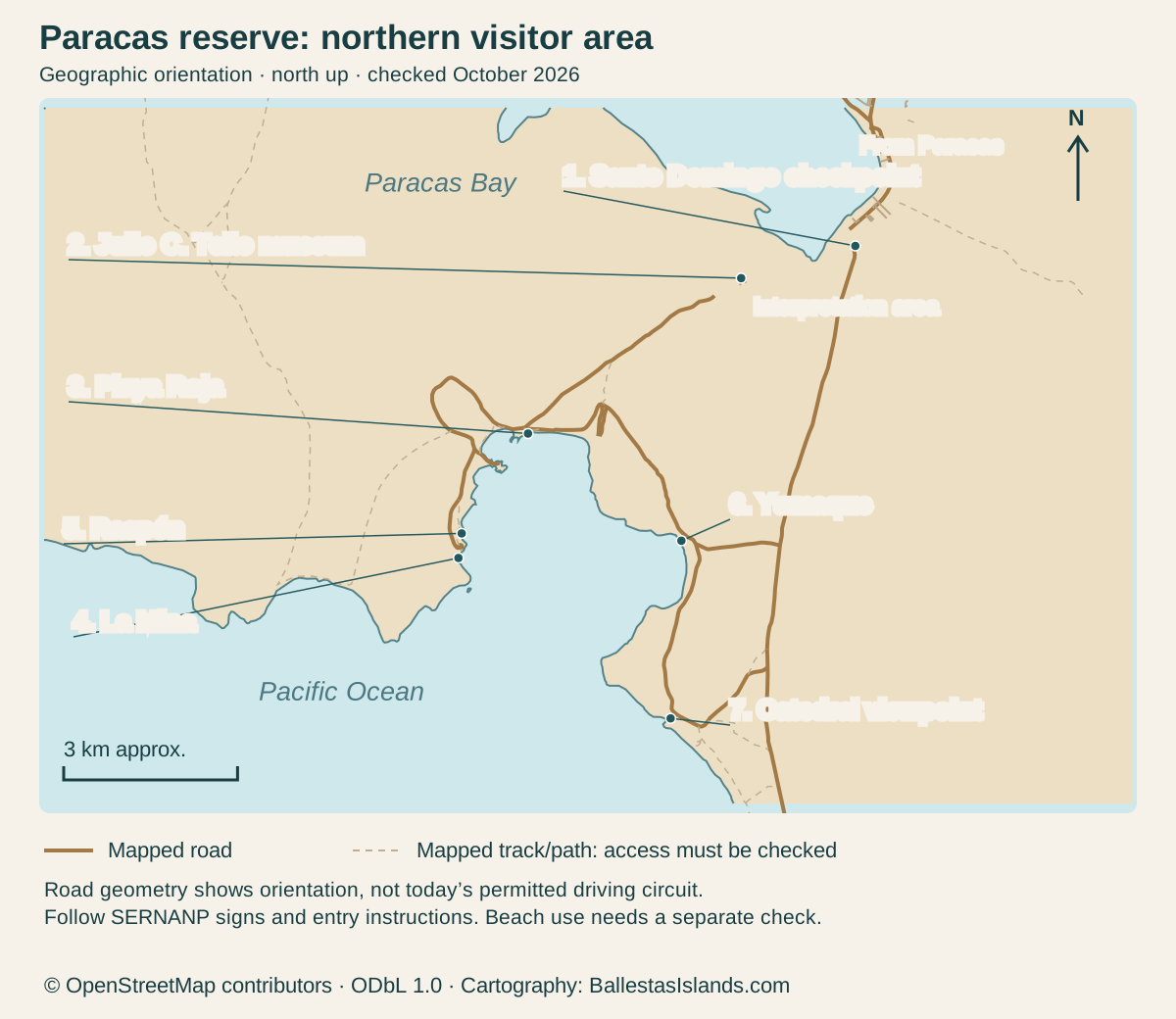
The SERNANP circuit map marks the museum and interpretation centre near the access side of the mainland circuit. Checked October 2026. Use it to see their relationship to the wider visitor route.
The reserve map guide separates those facilities from coastal viewpoints and beaches. Its schematic is not a walking route. Ask how you travel between the museum and the other stops you choose.
For an independent visit, arrange transport to the exact entrance and back. A car taking you to the reserve checkpoint is not automatically staying for the museum. Agree waiting, pickup and any later circuit before leaving town.
Access and facilities to confirm
Ask about the actual route from the vehicle to the entrance if steps or surfaces matter. Give the museum a specific need rather than asking only whether it is accessible. Room layout, seating and toilet access can matter in different ways to different visitors.
Do not infer a facility from the building's exterior photograph. A striking building can still require practical questions about the visitor route. Ask about each need before you go. Some guests may find a change on arrival hard to manage.
Check photography rules on arrival. Do not use flash, touch cases or cross a barrier without permission. A visitor's old photograph is not proof of the current rule.
Fit the museum into the land visit
Choose whether archaeology is the main aim or one part of a coastal day. If it leads the visit, protect the time inside before adding distant beach stops. If it is a brief introduction, be honest about how much the itinerary allows.
Ask a reserve tour provider to name the museum and state whether the group enters. “Museum area” can mean a drive past or a stop at another facility. Get the actual activity in writing.
For a combined boat and land day, ask what happens after a late sailing. The museum may not shift its closing because the group's earlier activity ran late. A flexible land route needs a clear priority order.
If you want both museum and a long beach stay, a slower itinerary may fit better. Time spent reading exhibits is not wasted time between photo stops. Choose the visit's purpose before asking a driver to compress every part.
How to use the visit well
Begin with the museum's own introduction, then follow the exhibition order. Read the source and context beside objects rather than treating a display as an isolated curiosity. The labels are the starting evidence for what you are seeing.
Keep questions factual and tied to the exhibits. Ask what an object is, where its context comes from and what the label can establish. Avoid turning a gap in a short label into a speculative claim.
For a family, agree a few observations to share afterwards. One person might notice material, another pattern or the way a display connects objects to place. This keeps the stop engaging without requiring everyone to read at the same speed.
Leave enough time to get back to the vehicle calmly. Tell the driver if the museum is running a controlled visitor entry or a queue affects the plan. Do not rush through restricted space to recover a poorly timed itinerary.
Sources and visitor questions
The official museum directory governs the visitor facts quoted here. The reserve circuit supplies location context. A review tells you about one visit. Use the museum itself for current entry rules and closures.
Is the reserve interpretation centre the same museum?
No. Ask for the Julio C. Tello site museum by name. The interpretation centre is a separate facility on the reserve map.
Does a reserve tour always include museum entry?
No. Read the itinerary and inclusion list. Ask whether it includes admission and time inside, rather than only a stop near the building.
Can you use an old free-entry announcement?
Only if a current rule applies to your date and category. A past special opening does not establish ongoing free admission for everyone.
A short way to read an exhibit
Choose one display and start with the label. Look for what the object is, where it came from and the date or period given. Then look back at the object. Its material, shape and surface can help you connect the written account with what you see.
Keep what you know separate from what you wonder. A label may establish a place and a date while leaving the maker unnamed. That is a useful limit. Ask a member of staff about a question rather than filling the gap with a story from an unrelated website.
For children, turn the stop into a small looking task. Ask them to choose a pattern or shape they can describe later. Let each person spend time with a different display if the group agrees on a meeting point. Reading at different speeds need not make the visit rushed.
If photography is allowed, read the rule about flash and other limits first. A photograph can help you remember a label, but it should not block another guest's view. Put the camera aside long enough to see the object itself, especially when the room is busy.
Bring one question back to the coast
After the galleries, think about one link between the exhibits and the place around you. The reserve coast gives the visit its setting. Use the museum's own account to make that link rather than treating the building as an isolated stop between beaches.
Share what each person noticed during a break or on the drive back. A few clear observations can be more memorable than a full room-by-room list. There is no need to read every panel to have a useful visit, provided the schedule gives you time to look closely at something.
Leave time for the agreed exit and vehicle meeting. If a queue changes the visit, tell the driver through the planned contact route. Shorten a lower-priority stop later instead of rushing the final galleries to recover an overfilled circuit.
Continue with the related guide
Verdict on the Paracas history museum visit
For a Paracas history museum plan, identify the Julio C. Tello site museum and use its current official visitor details. Keep admission, reserve access and transport clear. Leave time for the displays during your mainland reserve visit. Agree on the return before setting out.