
Flamingos Paracas: habitat, viewing and seasonal limits
Plan mainland flamingo watching in Paracas with species evidence, current access checks and realistic sighting expectations.

BallestasIslands.com is an independent travel guide. We are not SERNANP, a reserve authority or a tour operator.
Look for a mainland birdwatching plan if flamingos are the priority. SERNANP records the Chilean flamingo, also called parihuana, in the Paracas reserve. Check the viewing area and access with current local guidance. Watch from a distance. Do not walk towards feeding birds. Choose a shore visit you can enjoy even when no flock is there.
On this page8
- Flamingos in Paracas: start with the habitat
- Species identification: what the evidence supports
- Viewing areas need both habitat and access evidence
- Seasonality is not a booking guarantee
- Observation distance and etiquette
- Plan the mainland wildlife visit
- Continue with the related guide
- Verdict on flamingos in Paracas
Flamingos in Paracas are a mainland shore and wetland question, not a reason to assume the Ballestas boat will pass a flock. Plan a visit to suitable coastal habitat and ask about current permitted viewing. A bird recorded in the reserve can be absent from the spot you visit, even in a month often recommended for birdwatching.
Plan a mainland flamingo view
Choose lawful shore observation and patient watching, with no promised flock location.
Details for each option
Record or clue: Official reserve species account
- What it can establish
- Chilean flamingo occurs in the reserve
- What it cannot establish
- A flock will be at one stop today
Record or clue: Historical photograph
- What it can establish
- A photographed scene at a stated place
- What it cannot establish
- Current abundance or open access
Record or clue: Dated field observation
- What it can establish
- A bird recorded on that visit
- What it cannot establish
- A guaranteed repeat sighting
Record or clue: Distant pink shapes
- What it can establish
- A reason to look more carefully
- What it cannot establish
- A full species identification on colour alone
Sources and limits are explained in the guide · · Table by Ballestas Islands
Flamingos in Paracas: start with the habitat
SERNANP's Paracas reference names the Chilean flamingo among the reserve's birds. Checked October 2026. That is occurrence evidence for the wider protected area. It is not a map of a flock's position today.
Look for a shore-based outing that gives time to observe, rather than a land tour that only stops briefly for a general view. Tell the guide what matters to you before paying. A guide can then explain whether the proposed route fits that interest.
The mainland bird guide places flamingos beside other coastal birds. Keep that broader view. A wetland can be worth watching even when the large pink birds are elsewhere.
Species identification: what the evidence supports
The official reference uses the scientific name Phoenicopterus chilensis. That names the Chilean flamingo. Other parts of Peru have other flamingo species. Use the name when comparing a photograph or checklist with a source.
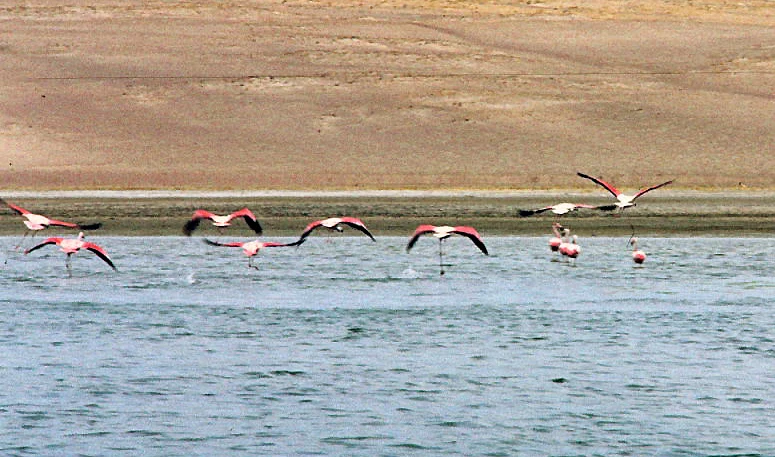
The credited hero is a real historical Paracas photograph. It shows flamingos at the place and time of that photograph. It does not establish present numbers, access or the species of every distant bird in your own view.
Ask the guide to explain the features visible through the scope or binoculars. A distant group may not show enough detail for a firm species record. Do not let the expectation of flamingos fill in marks you cannot actually see.
Viewing areas need both habitat and access evidence
The Paracas coast includes bays and shallow-water settings, but that does not mean every shore is a public approach. Ask the reserve staff where viewing is permitted now. Use the designated route and follow barriers even when the birds seem close beyond them.
The SERNANP visitor information gives the official starting point for access enquiries. Checked October 2026. A general visitor page does not replace the instruction at a particular stop on the day.
Ask whether a proposed stop is a viewing point, a road pull-off or an area requiring another permission. Those are different arrangements. A pin shared online may be useful for orientation while still being unsuitable as a place to park or approach.
No flock location in this guide is a guaranteed stop. That restraint is practical: a fixed pin is a poor promise for moving wildlife. A current guide's habitat knowledge is more useful than a copied old photograph caption.
Seasonality is not a booking guarantee
Bird movements can vary across the year and between years. A travel page may describe a usual period, while a dated observation records only one visit. Neither removes the need to ask about current conditions.
If a supplier promises flamingos, ask what the promise means. Is it a visit to suitable habitat, a recent sighting report or a money-back condition? Save the answer before assuming the trip includes a particular result.
Do not use the word “resident” to imply every bird remains visible all day. Even a species present in a region can move within it. Feeding, resting and disturbance all affect where a group is seen.
If flamingos are your main interest, allow more observation time and keep the plan flexible. Ask whether the outing can spend time at an appropriate permitted area rather than rushing to many scenic stops. The guide must still respect current routes and wildlife rules.
Observation distance and etiquette
Use binoculars or a scope from the permitted viewing place. Do not move toward the flock simply because the birds have not yet flown. A bird may change its behaviour before it takes off.
Avoid standing between birds and the water they are using. Follow the guide's positioning instructions and leave the group room. Keep voices low and do not wave, clap or play calls to make birds turn toward the camera.
If the birds move away, do not follow them across the shore. A retreating flock is not an invitation to repeat the approach. Stop and let the guide decide the responsible next step.
Keep children with the group and explain the aim before reaching the viewing area. Watching a feeding bird through a scope can be more memorable than chasing a moving pink line into the distance. Let the birds set the scene.
Plan the mainland wildlife visit
Tell the supplier that your priority is flamingos and ask for a suitable mainland plan. Check the transport, permitted stops and amount of observation time. An island-only trip answers a different question.
The reserve wildlife guide describes the wider habitat choices. Use the reserve tour comparison to assess a land outing. Ask whether the guide has birdwatching equipment or whether you need your own.
Bring water, sun protection and a layer for the conditions. Secure loose items so they do not blow across the shore. Leave rubbish out of wildlife habitat, even when a bin is not nearby.
Keep a useful fallback. A visit can still show shore birds, the shape of the bay and how the habitat fits the desert. Do not ask a driver to take an unapproved route simply to rescue a promised sighting.
Are flamingos part of the Ballestas boat trip?
Do not assume so. Plan them as a mainland habitat interest. The island animal guide explains what the offshore outing is designed to show.
Does a recent photo prove a flock will be there?
It proves that scene was photographed then, if the place and date are reliable. It does not control where the birds move afterwards.
Continue with the related guide
Verdict on flamingos in Paracas
Plan to see flamingos in Paracas from an allowed shore viewpoint. Leave time to watch and be ready for no flock. Keep the Chilean flamingo identification tied to the evidence you can see. Choose the outing for a responsible look at the shore, with a possible flock as part of the visit rather than a guaranteed performance.