
Ballestas islands birds: identification and boat viewing
Identify the main Ballestas bird groups from shape and behaviour, with boat-viewing limits and responsible observation.

BallestasIslands.com is an independent travel guide. We are not SERNANP, a reserve authority or a tour operator.
Use body shape, bill and behaviour before colour alone. Guanay cormorants, Peruvian boobies and Inca terns have different outlines and habits, but young birds may not match an adult photograph. Ask the guide and keep uncertain records qualified. The boat's permitted route and wildlife needs take priority over a close view of a particular bird.
On this page9
- Ballestas Islands birds: start with the offshore groups
- Identification table and a real colony view
- Guanay cormorants and the guano landscape
- Boobies, terns and birds in flight
- Boat-viewing limits
- Seasonality and conservation sources
- Responsible birdwatching from the boat
- Keep a useful sighting note
- Verdict on Ballestas Islands birds
Ballestas Islands birds are best understood in groups before you try to name every individual. Look for cormorants, boobies and terns around the rocks, with Humboldt penguins as a distinct bird to watch for on ledges. A moving boat, glare and crowded colonies can hide the fine marks needed for a firm identification.
Bird identification at a glance
Use shape and behaviour with these clues, and leave a distant or brief view uncertain.
Details for each option
Bird: Guanay cormorant
- Adult clue
- Dark upperparts with a pale chest and belly
- What can mislead you
- A shaded front can look dark too
Bird: Peruvian booby
- Adult clue
- Pale head with a long pointed bill
- What can mislead you
- A young bird may have different plumage
Bird: Inca tern
- Adult clue
- Dark grey body with a pale curved facial mark
- What can mislead you
- The fine mark can vanish at distance
Bird: Humboldt penguin
- Adult clue
- Upright outline and dark chest band
- What can mislead you
- A small upright bird can be hidden by rock
Sources and limits are explained in the guide · · Table by Ballestas Islands
Ballestas Islands birds: start with the offshore groups
The islands belong to a protected coastal system that supports seabirds. SERNANP's reserve-system reference gives the wider context. It is a regional account, so its full list is not a checklist for one Ballestas sailing.
For practical identification, use the protected-area bird guide, published in 2014. Its Paracas pages describe the main coastal bird groups. Checked October 2026. The descriptions help with appearance; the old guide does not settle today's access, abundance or threat category.
Pick a small number of birds to learn before the trip. You will gain more from knowing what a cormorant looks like than from memorising a long unqualified list. The first goal is to notice the differences in the scene.
Identification table and a real colony view
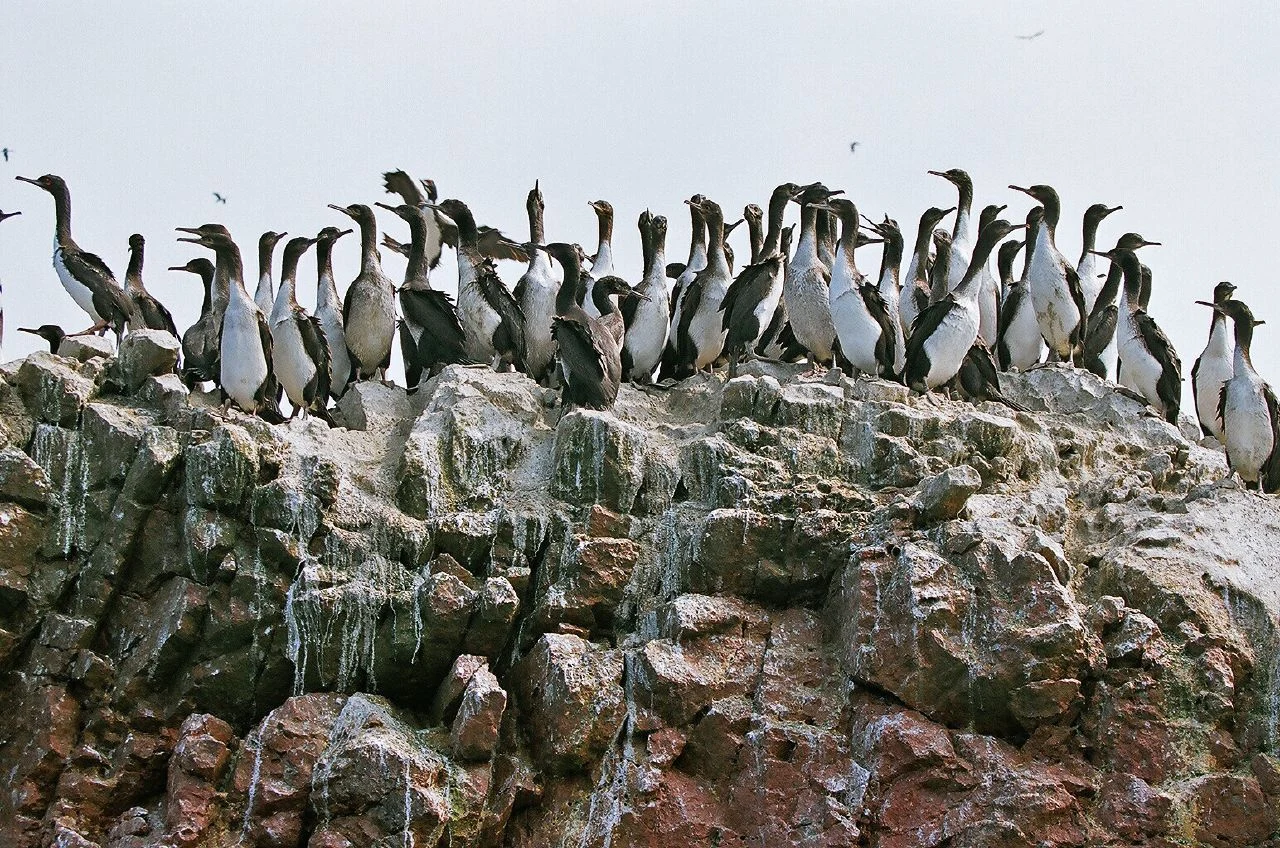
The hero photo shows a real group of guanay cormorants at Ballestas. It is a record of that photographed scene, not the size of a colony today. Use the credited source to see the original image and its context.
An adult's clear feature is a clue, not a complete test for every bird. Age, posture and light can change the view. If the detail is not visible, move back to a broader identification rather than inventing the missing mark.
Guanay cormorants and the guano landscape
Guanay cormorants are one of the seabird groups linked with guano. Guano is bird droppings that build up where large numbers of birds rest and breed. It is part of why the coastal islands and points form a managed reserve system.
Look at the spacing and the surface of a colony. Many birds can seem like a single dark area until a few move. A wide view shows where they use the ledges and how the group fits the rock.
Do not assume every dark bird in the colony is the same species. Ask the guide which features are visible from your position. If the answer depends on a detail you cannot see, record the group more broadly.
Avoid turning a historical guano account into a claim about work occurring on the day. Management and access have their own rules. A tourist boat view does not give permission to land or approach working areas.
Boobies, terns and birds in flight
A bird in flight gives you shape and movement as clues. Notice its bill and wing outline, then how it flies or feeds. Do not rely only on a flash of white against the sea.
Peruvian boobies and Inca terns are distinct birds. The official guide describes the booby's pale head and pointed bill, and the adult tern's dark body with a pale facial curl. Those marks help when the view is clear. They are less useful in a silhouette or a blurred phone photo.
A bird diving is an interesting observation even before you know its name. Tell the guide what you saw and where. Keep looking at the bird while the guide explains, rather than losing it in a camera menu.
Leave fine identification for a stable view or a later review of a clear image. A zoomed crop cannot restore detail that was never captured. Keeping a note of the habitat and behaviour can help more than enlarging the same blur.
Boat-viewing limits
Ask how the guide helps both sides of the boat see the colonies. Do not demand a risky position for a photograph. The crew must manage the route, other vessels and conditions as well as the view.
Stay where instructed and secure loose equipment. If you cannot hold binoculars steadily, use your eyes for a wider view. You may notice more of the colony's movement that way.
For Humboldt penguins, look slowly along ledges rather than expecting a large flock on a beach. Ask the guide to point to a fixed rock feature. That can help you find a small bird in a complex background.
Remember that a bird hidden behind another bird has not disappeared from the place. Your viewing angle is only part of the colony. Do not infer population change from how many individuals fit in your photograph.
Seasonality and conservation sources
A dated species record establishes that an observer recorded a bird at a place and time. It is not a forecast for the same date next year. A wider range map is broader still.
For current threat categories, use the relevant dated species assessment. This guide does not copy the 2014 bird guide's old labels as if they were current. National and global categories can differ, and the date matters to either one.
The IMARPE Ballestas seabird study is primary research about the islands. Use its study period when interpreting records or counts. Scientific survey results and a tourist sighting probability answer different questions.
Responsible birdwatching from the boat
Do not use calls, food or sudden noise to create a flight photograph. A bird taking off to avoid disturbance is not a better sighting than one resting normally. Let the guide and crew maintain the appropriate approach.
Take waste ashore and avoid loose packaging. If you notice an injured bird, alert the guide rather than trying to touch it. The visit should leave the colony doing what it was doing before the boat arrived.
For shore birds, use the separate Paracas bird guide. The animal overview puts seabirds beside sea lions without mixing the mainland and offshore trips.
Keep a useful sighting note
Write the bird's shape, colour and behaviour while the view is fresh. Add where you saw it on the route. A rough note can be more useful than a guessed name. If the view was too brief, mark it as unsure and ask the guide later.
For photographs, keep the original image. A heavily cropped or edited picture can hide the size and setting that help with an identification. Let a small distant bird remain unnamed if the photo does not show enough. The visit can still give you a good sense of the island colonies.
Verdict on Ballestas Islands birds
Enjoy Ballestas Islands birds through a few well-supported identifications and a wider view of the colonies. Leave uncertain birds qualified and never trade responsible viewing for a close crop. Check the boat departure choices before travel so the wildlife outing fits the rest of your day.