
Ballestas islands penguins: Humboldt penguin viewing guide
Learn which penguin lives at Ballestas, what a boat view can show and why a sailing cannot guarantee a sighting.
.jpg)
BallestasIslands.com is an independent travel guide. We are not SERNANP, a reserve authority or a tour operator.
The penguin to learn is the Humboldt penguin, Spheniscus humboldti. Use the upright body shape and adult dark-and-white pattern as starting clues. Ask the guide to point out a fixed rock feature so you can find the bird. Keep the boat's route and wildlife rules ahead of a photo, and do not book on a guaranteed-sighting claim.
On this page8
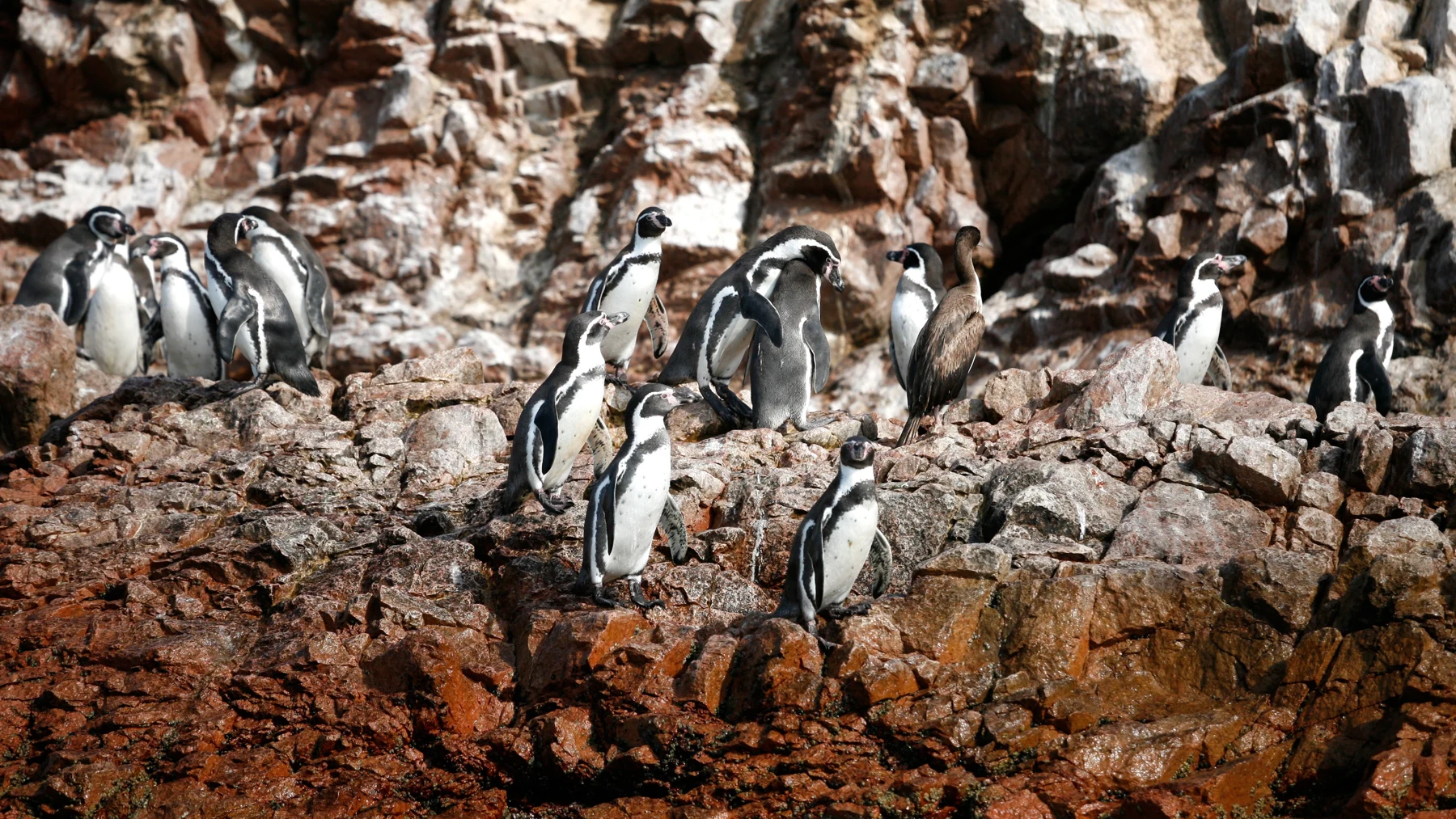
Ballestas Islands penguins are Humboldt penguins, a coastal species found in this part of the Pacific. Look for them on rocky ledges from the boat. They may be small in the view and can blend with the background. A visit can offer a chance to see them without promising a close photograph or a fixed number.
Which Ballestas Islands penguins live here?
SERNANP's Ballestas report names Humboldt penguins among the islands' wildlife. Checked October 2026. The report establishes the place and species, not the outcome of your sailing.
An adult has a dark head and back, a pale front and a dark band across the chest. The official bird guide describes those features and the difference in younger birds. It was published in 2014. Use the appearance notes without treating every old travel or status detail as current.
The name is useful when comparing sources. “Penguins in Peru” is a broad topic, while Spheniscus humboldti identifies this species. A picture of a different penguin on ice would not explain what you are looking for at Ballestas.
Rocks, sea and feeding context
The important setting is a rocky coast with access to the sea. Do not expect a snow scene or a beach landing among birds. This is an offshore viewing trip, and the penguins' use of the water means some may be out of view.
Look at the ledges in a slow sweep. A dark shape beside a pale rock can be easy to overlook. Once you find one bird, notice how its outline differs from nearby seabirds. Ask the guide before naming every upright shape a penguin.
Keep food stories separate from what you observe. A bird standing on a ledge is not showing its diet. The wider IMARPE Ballestas research gives primary study context, with its own dates and limits.
What a boat view can show
You may see the body outline, plumage pattern and the bird's position on the rock. You may not see enough to age it or tell what it is doing beyond resting or moving. Let the detail available set the strength of your description.
If the guide points out a bird, use a shared landmark. A particular ledge or rock edge helps more than “over there.” Keep your gaze on the area while lifting binoculars so you do not lose the position.
Take a wider photograph before trying a tight one. The wider view records the habitat and can help you find the bird again. Do not lean out or stand against crew instructions to make a small subject larger.
Seasonality and uncertain sightings
No calendar month in this guide guarantees penguins on the visible ledges. A published record tells you the species occurs here. It does not establish where each bird will be while your boat passes.
Sea conditions can affect the visit too. The boat must operate under the relevant local decisions. A calm-looking forecast is not a guarantee that the scheduled route will run as advertised.
Choose a trip for the whole island experience, with penguins as one part of it. The animal guide includes sea lions and other birds. That broader interest makes the visit less dependent on one photograph.
Conservation status needs a date
Use the BirdLife species factsheet for a dated global threat assessment. Check its assessment year before repeating a category or population figure. A species' global status does not tell you how many penguins will be visible at Ballestas on your departure.
That limit does not weaken the practical rule: watch without disturbing the birds. National and global labels also answer different questions. Do not copy one into the other without checking the source and date.
Viewing etiquette and trip planning
Keep noise low and food packed away. Do not ask the crew to land, touch a bird or move closer than the permitted approach. A penguin continuing to rest is a useful wildlife view.
For children, explain before departure that animals are not props. The guide may show a bird that stays distant. Binoculars and a patient search can be part of the experience without demanding a response from it.
Continue with the related guide
Verdict on Ballestas Islands penguins
Look for Ballestas Islands penguins with a clear idea of the Humboldt species and modest expectations about distance. Learn the outline, ask the guide and leave uncertain details qualified. Compare the boat trip formats for a usable departure, rather than buying a promise that a wild bird will be waiting in view.